
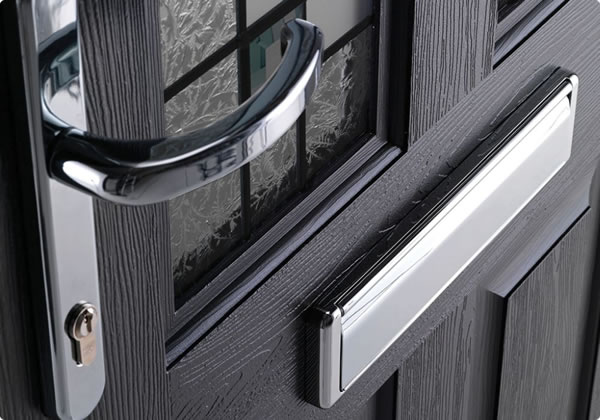
Not All Composite Doors Are Equal: The Truth Homeowners Need to Know
Composite doors have become the best choice for external doors for homeowners across Peterborough, Deeping St James, Stamford, Market Deeping, and the surrounding villages. There is a good reason why! A good composite door can deliver strong security, excellent insulation, and a smart finish that lifts the whole front of the property.
But here is the part most people only discover after they have purchased one: “composite” doesn’t automatically mean “high quality.” Composite doors vary massively in how they are built. Also, how they perform, and how they hold up over time.
At Peterborough Doors, we are local. We see the full mix—new builds, 1930s semis, Victorian terraces to rural cottages. We get called out when doors do not shut right, locks don’t line up, or draughts creep in. This blog is a straight-talking look at what really matters when you are comparing composite doors, and how to spot the difference between a door that is built to last and one that is built to hit a price point.
1) “Composite” just means mixed materials — it doesn’t guarantee performance
A composite door is made from more than one material. That is it. Most use some combination of:
- GRP (Glass Reinforced Plastic) skins on the outer faces (tough, weather-resistant, can look like timber)
- A core (this is where the biggest differences are)
- Reinforcement inside the door leaf (varies by brand)
- A frame, seals, hinges, glazing, and a locking system
Two doors can both be called “composite” and still feel completely different in your hand. One will close with a solid “thunk” and stay aligned for years. Another will feel light, flex under pressure, and need repeated adjustments.
2) The core is the heart of the door (and most people never ask about it)
If you want one thing to compare, compare the door core. It affects security, rigidity, insulation, and long-term stability.
Common core types you will see:
- Foam-filled cores (often polyurethane foam):
Good for thermal performance (keeping heat in), but can be lighter and in some designs the door can flex more. - Timber subframe with foam infill:
Better than basic foam slabs in some cases, but timber can move with moisture and temperature if not engineered properly. - Solid high-density cores (found on premium ranges):
Heavier, more rigid, and typically better at resisting attack methods that rely on flexing or bowing the door.
A door that is rigid holds alignment better. That means the hooks and bolts in the multi-point lock engage cleanly, the seals compress properly, and you do not end up forcing the handle up just to lock it.
In our local area—where we get cold snaps, wet winters, and plenty of wind exposure on open streets—a stable door makes a noticeable difference.
3) Security is not just a lock — it’s a complete system
Most composite doors are sold with “multi-point locking” as the headline. That’s not wrong, but it’s not the full story.
A strong lock on a weak or flexible door slab is like fitting a top-quality padlock to a thin shed door. The lock might be good, but the rest of the system needs to back it up.
When we talk about door security, we look at:
- The door leaf strength: does it flex? is it reinforced?
- The frame strength: is it rigid and correctly fixed to the brickwork?
- The locking system: multi-point, number of locking points, hook bolts, latch operation
- The cylinder: ideally an anti-snap cylinder (reduces risk from cylinder snapping attacks)
- The hinge side: hinge bolts or security hinges to protect the “back edge” of the door
- Installation quality: correct packers, fixings, and alignment
In real-world terms, a secure door is one that stays secure after years of use—not just on day one.
4) Weight and feel matter (and they tell you something)
You can often tell a lot by simply opening and closing the door.
A higher-quality composite door typically feels:
- More solid
- More stable
- Less “springy” through the middle
- More consistent when closing into the frame
A lighter door isn’t automatically bad—but if it feels thin or flexes, it’s a clue that the internal construction may be more basic.
This is why we always encourage customers around Peterborough to see door samples before committing. Photos don’t show how a door behaves.
5) Thermal efficiency: don’t fall for vague claims
Everyone wants a warm, draught-free hallway. Composite doors can help a lot, but the details matter.
What actually improves thermal performance:
- A well-insulated core (foam or solid high-density, depending on design)
- A thermally efficient frame
- High-quality seals (often multiple seals)
- Correct installation so the frame is square and the seals compress evenly
- Correct threshold choice (especially on older properties with uneven floors)
If you have ever felt a cold line of air around a front door, that’s usually not because “composite doors are draughty.” It’s because the door and frame aren’t sealing properly. This could be from either poor fitting, low-grade seals, or a door that has moved out of alignment.
6) Warping, dropping, and “sticky locks” are usually design and fitting issues
These are the problems we most often get asked about when people replace a door they bought elsewhere:
- Door catching on the frame
- Lock hard to lift or not locking smoothly
- Gaps appearing around the edge
- Draughts returning after a winter
- Handles becoming loose or needing frequent adjustment
Some of that is normal “settling in,” but persistent issues often come down to:
- A door leaf that flexes or twists
- Inadequate hinge spec for the door weight
- Poor frame fixing or poor packer placement
- Incorrect adjustment after installation
A good installation makes a big difference. We take time on alignment because it protects the locking system and reduces wear. That matters in busy households where the front door gets used constantly.
7) Glazing and decorative finishes: looks matter, but construction still comes first
Composite doors are popular because they look great. You can choose:
- Traditional panel designs for older properties
- Modern flush styles for newer homes
- Decorative glazing, frosted glass, or clear glass
- Hardware finishes like chrome, black, satin, and more
But the design should sit on top of a strong door, not make up for a weak one.
If you want glazing, ask:
- Is the glazing unit double glazed (or upgraded where available)?
- Is it properly sealed?
- Is the cassette system robust (the frame that holds the glass)?
- Does it affect the security rating of the door?
A well-designed glazed composite door can be secure and efficient. It’s all about correct specification.
8) The frame is just as important as the door
Homeowners often focus on the door slab, but the frame carries the load, holds the seals, and anchors the locking keeps in the right place.
A quality door in a poor frame is wasted money.
When comparing quotes, ask:
- What frame system is included?
- How is it fixed to the opening?
- What’s used to achieve weather tightness (seals, silicone, trims)?
- Is the threshold suitable for your entrance (especially for accessibility and water run-off)?
In Peterborough and the surrounding area, we see plenty of entrances that aren’t perfectly square—especially on older housing stock. A good installer knows how to handle that properly without creating weak points.
9) Guarantees are useful — but they don’t replace build quality
Many doors come with guarantees. That’s fine. But a long guarantee does not always tell you how the door will feel and function day-to-day.
A better way to judge value is:
- How stable is the door design?
- Is the hardware a known, reputable spec?
- Is the door suited to heavy use?
- Is the installer experienced and local (so aftercare is straightforward)?
We are proud of the work we do locally because customers want someone they can actually call if they need an adjustment or advice—not a faceless online retailer.
10) What homeowners should ask before buying any composite door
If you want to cut through the sales talk, ask these direct questions:
- What core does the door use? (foam, timber subframe, solid/high-density?)
- What locking system is fitted? (multi-point, hook bolts, brand/spec)
- Is the cylinder anti-snap and approved to current security standards?
- How many hinges and what hinge type will be fitted?
- What frame system is included and how is it fixed?
- What seals are used and how many sealing points are there?
- Is the door and installation compliant with relevant building requirements?
- Who is fitting it and what aftercare is available locally?
If a supplier can’t answer these clearly, you’re taking a gamble.
The bottom line: a “composite door” can be brilliant — but only if it’s the right one
Composite doors are a smart investment when they’re built properly and installed properly. The difference is in the details: the core, the rigidity, the security components, the frame, and the workmanship.
For homeowners across Peterborough and Deeping St James, the best results come from choosing a door that suits the property and is fitted by a team that understands local homes and local conditions. That’s what we do every day.
If you want help comparing options, we can talk through the door styles you like, whether you need more light through glazing, what security level you’re aiming for, and what will work best for your entrance. No jargon. No hard sell. Just practical advice from a local team that knows the area.

Leave A Comment